Last year in a post entitled Barcelona, 1908 I shared an video shot from the front of a streetcar navigating the avenues of the title city a little over a century ago. As you'll remember (if you don't, feel free to go back and take a look), I commented on the complexity of the methods of mobility that took up street-space in relative harmony. From pedestrians, to bicyclists, to carriages, to even a few early automobiles, the streets were a genuine mix of modes of transportation. Now I bring you back to an early 20th Century European city, but this time it's Paris, 1928.
The differences are immediately apparent. There are many more automobiles, and pedestrians largely keep to the sidewalks instead of weaving in front of the streetcar-mounted camera as they did in Barcelona. It's interesting to see the changes and the prevalence of the automobile only twenty years after the first clip.
In 1928 Paris you will notice a city struggling with the pressures of this increase in automobile traffic. Street activity, largely unregulated and unsupervised before, now necessitates direction from officers who stand down oncoming vehicles. At the 1:18 mark, the camera captures the somewhat organized chaos of the bustling intersection where one car drifts into the flow of oncoming traffic. But no one really has right of way anyway and there aren't even lanes, so who is at fault here? Here's a frightening thought -- think of being on the road with that many new drivers, operating largely unfamiliar technology in a space with little oversight. No wonder the pedestrians stick to the sidewalks except to cross...
My takeaway from this video (in reference to the first) is the pace at which automobiles infiltrated the centers of these old cities that for centuries had operated largely on foot traffic as the primary mode of transportation. More autos traveling at higher speeds on cramped streets relegated pedestrians to the sidewalk where they understandably felt more safe. This separation transformed the function of these streets, and had serious implications for them as public spaces. This compartmentalization of uses is the challenge the shared space movement, and to a certain extent the complete streets initiative, attempt to correct through redesign and reprogramming of streets, thereby changing public perception of streets as car-only zones to ones accepting and emboldening of more diverse modes of transportation.
Sometimes we must look back in order to move forward.
Sunday, March 11, 2012
Sunday, February 26, 2012
Back in Action//Analyst versus Advocate
*wipes away cobwebs across computer screen*
Hey all, it's me. Yeah me. Remember way back when I actually contributed to this blog? I know I've been absent for quite some time--it's interesting how unplanned breaks can balloon into extended sabbaticals--but here I am, back in action.
So what have I been up to these past six months, you ask? Well in October I started working at the Connecticut Department of Energy and Environmental Protection. I have contributed to numerous projects so far, including writing press releases and other copy for the Communications Office, administering an energy efficiency program charged with reducing energy consumption in state-owned buildings by 10 percent in the next year, and I'm also the mind behind a massive restructuring effort for the energy-related content on the agency's website.
Overall, working at DEEP has been an incredible experience. Having a boss and supervisors who trust in my abilities and challenge me to meet their high expectations is rewarding. It's also been a unique opportunity to see the inner workings of government itself, often given a bad rap for being a bloated mess of bureaucracy and red tape. My impression of DEEP couldn't be further from that perception. Thanks to a commitment to environmental goals from Connecticut Governor Dannel Malloy and the leadership of DEEP Commissioner Daniel Esty, the Department is well-poised to drive real change in a state in desperate need of better economic performance. And that's the thing, environmental policy and programs are viewed as our ticket out of the recession. The conversation is about how we achieve environmental and energy goals while stimulating local job growth. My time at DEEP has shown me how there is a growing opportunity for E&E policy action at the state level, especially given the failure of Congress to pass any meaningful and comprehensive climate legislation.
Now that I've updated you on one of the major goings-on in my life since I left you, let's get down to business. For my first post post-hiatus (see what I did there), let's discuss Analysts versus Advocates.

University of British Columbia professor George Hoberg recently posted this explanation of climate-political mindsets to his blog, GreenPolicyProf. Hoberg describes how there are three approaches to climate politics--skeptic, analyst, and advocate. He devotes most of the post to the last two, and describes skepticism as "too mysterious" to warrant extended investigation. As someone who has assumed both the analyst and advocate roles in the last year even, I found the piece an interesting critique of each.
Here are the fundamental differences between analysts and advocates, as explained by Hoberg:
Hoberg again:
When I set out to write this post I was worried I would be out of blogging shape. I really have missed writing on a regular basis on a topic I care deeply about. I can't promise anything, but I do plan to post more and I have a few ideas in the works so we'll see where we end up.
Happy reading, reflecting, world-changing.
Hey all, it's me. Yeah me. Remember way back when I actually contributed to this blog? I know I've been absent for quite some time--it's interesting how unplanned breaks can balloon into extended sabbaticals--but here I am, back in action.
So what have I been up to these past six months, you ask? Well in October I started working at the Connecticut Department of Energy and Environmental Protection. I have contributed to numerous projects so far, including writing press releases and other copy for the Communications Office, administering an energy efficiency program charged with reducing energy consumption in state-owned buildings by 10 percent in the next year, and I'm also the mind behind a massive restructuring effort for the energy-related content on the agency's website.
Overall, working at DEEP has been an incredible experience. Having a boss and supervisors who trust in my abilities and challenge me to meet their high expectations is rewarding. It's also been a unique opportunity to see the inner workings of government itself, often given a bad rap for being a bloated mess of bureaucracy and red tape. My impression of DEEP couldn't be further from that perception. Thanks to a commitment to environmental goals from Connecticut Governor Dannel Malloy and the leadership of DEEP Commissioner Daniel Esty, the Department is well-poised to drive real change in a state in desperate need of better economic performance. And that's the thing, environmental policy and programs are viewed as our ticket out of the recession. The conversation is about how we achieve environmental and energy goals while stimulating local job growth. My time at DEEP has shown me how there is a growing opportunity for E&E policy action at the state level, especially given the failure of Congress to pass any meaningful and comprehensive climate legislation.
Now that I've updated you on one of the major goings-on in my life since I left you, let's get down to business. For my first post post-hiatus (see what I did there), let's discuss Analysts versus Advocates.
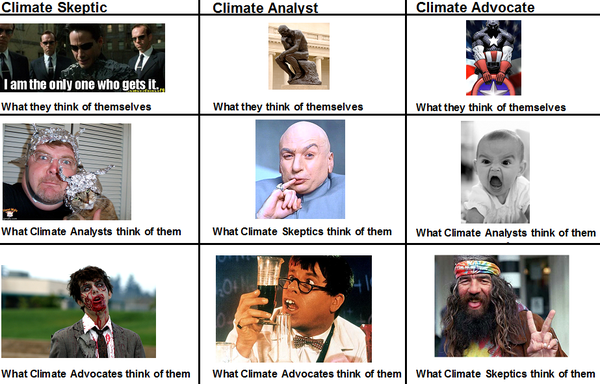
University of British Columbia professor George Hoberg recently posted this explanation of climate-political mindsets to his blog, GreenPolicyProf. Hoberg describes how there are three approaches to climate politics--skeptic, analyst, and advocate. He devotes most of the post to the last two, and describes skepticism as "too mysterious" to warrant extended investigation. As someone who has assumed both the analyst and advocate roles in the last year even, I found the piece an interesting critique of each.
Here are the fundamental differences between analysts and advocates, as explained by Hoberg:
The logics of analysis and advocacy are fundamentally different. The analyst is guided by aspirations for truth and well-reasoned argument, and guided largely by the value of maximizing the cost-effectiveness of solutions. They chaff against exaggerations and misuse of data by advocates on all sides, and search for the best reasoned argument for the most efficient path forward.Using the Keystone XL Pipeline debate as an example, he says the typical analyst mind evaluates the proposal as follows. We need oil--> building it won't significantly contribute to climate change--> Canada is a friendly trade partner --> approve the pipeline. Advocates on the other hand view the pipeline as a symbol for the larger environmental crises, and use it as political capital to push their overall message.
In contrast, the climate advocate is trying to maximize political leverage in an effort to foster systemic transformation of the energy system. The logic of political action and movement building is different from the logic of policy efficiency. The advocate works to strategically frame problems and solutions that work politically, not those that best adhere to the standards of analytical rigor. Frequently, this involves exaggerated claims that aggravate the analyst.
Hoberg again:
[Bill] McKibben and his allies didn’t choose to draw a line in the sand on Keystone XL because it was the most cost-effective policy to reduce GHG emissions. They picked it because it made political sense given the state of the climate movement in US and global politics. Having failed so spectacularly at Copenhagen and then in the US Congress to get meaningful action, McKibben and Co. recognized that to have meaningful success, more direct action would be required to galvanize the intensity of preferences at the grassroots level needed to foster a powerful social movement. Keystone XL turned out to be a perfect short-term vehicle for that. It was a point of leverage they could use to focus concentrated pressure, and it turned out to be a spectacular success on its own terms.As someone still defining his professional and personal identity, I'd like to think I combine the advocate's passion for positive environmental change with the analyst's pragmatism. I don't think the two are necessarily exclusive. In my mind the philosophical construct is more a sliding scale than distinct silos. I'll continue to think about how I define my approach to solving the environmental challenges we face in the 21st Century, and I encourage you to do the same.
When I set out to write this post I was worried I would be out of blogging shape. I really have missed writing on a regular basis on a topic I care deeply about. I can't promise anything, but I do plan to post more and I have a few ideas in the works so we'll see where we end up.
Happy reading, reflecting, world-changing.
Wednesday, September 7, 2011
You Disappoint Me, Mr. President

This morning I received an email from Obama for America, the organizing group for President Obama's 2012 campaign, with the headline "This Email Will Offend You."
Here's how the email began:
Adam --Sure, it offends me that one of the biggest oil barons of our time, responsible for more environmental destruction and climate change than maybe any other American (I admit I'm not sure if this is true, but just think of all of that oil...) would quote a vile dictator in reference to the 2012 presidential race. But this email seemed out of touch with something I've been thinking for a little while now -- that Obama himself is alienating his base by disregarding the values that got him elected. Obama the president could not be more different than Obama the candidate. Plus I could think of something that offends me more -- his recent cave on improved ozone standards. As Adrianna Quintero writes on NRDC's Switchboard:
Here's something you and I weren't supposed to find out:
At a private function at a Colorado resort, oil billionaire Charles Koch stood in front of hundreds of conservative millionaires and said the 2012 election will be, in the words of Saddam Hussein -- yes, he decided to quote Saddam Hussein -- "the mother of all wars."
He then read through a list of 32 contributors who gave more than a million dollars each to bankroll the network of corporate special-interest groups that aim to tear down President Obama.
If that offends you, it absolutely should. But it should also motivate you, because you are the only thing that can stop them.
Passing a stronger standard would save (yes, SAVE!) as much as $37 billion per year in health benefits at a cost of roughly $20 billion by:She continues, sharing my frustration with Obama's compromise or inaction on these important issues:
It seems that none of these very obvious questions matter to them [politicians] anymore. Knee-jerk reactions to overblown claims by political rivals are what rule the day and motivate action in Congress and in the Administration. Reason and facts are looked down upon. Thoughtfulness is viewed as pretentious. And protecting our country, our children, MY children, equals political poison.With this sentiment and that of being arrested at the White House taking nonviolent direct action for climate fresh in my mind, I responded to the initial email with this message:
"You know what really offends me? That the man I voted into office in 2008 (my first ever presidential election vote, by the way) on the platform of hope and change has done little on the subject of climate change. His cave on ozone regulation makes me sick, literally and figuratively. I was arrested in front of the White House two weeks ago when I engaged in civil disobedience against the Keystone XL pipeline, which would bring tar sands, the dirtiest fuel on the planet, from Canada to US refineries along the Gulf Coast. If President Obama approves this pipeline, and continues his track record of caving on and not actively pursuing stricter climate policy, I will not vote for him in 2012. I know many of my friends, family members, and fellow concerned Americans feel the same way, and I hope you can somehow relay this message to him."
A group of Keystone XL pipeline opponents recently gathered at an Obama campaign office in Seattle to share this same message with the staff there. They bring up the point that not only are their votes at stake, but also their willingness to donate and volunteer for the campaign and defend Obama to their friends and colleagues.
Obama clearly has some explaining to do or I fear he'll have a tough time of it next November. I never thought Obama would ever be the lesser-of-two-evils candidate, but if he doesn't start proving his commitment to climate and the other core values that so endeared him to us in 2008 he will face that fate and risk being a one-term president.
Tuesday, August 23, 2011
We Shall Overcome
"Sir, step forward please."
A buff mustachioed officer of the DC Park Police motioned me to come closer. I'll never forget his next four words, "You are under arrest." He then told me to turn around and snapped thick plastic bands around my wrists.

I was the third-to-last of 59 participants in civil disobedience earlier today to be arrested at the White House. We were taking nonviolent direct action in opposition to the proposed Keystone XL Pipeline, which would bring tar sands oil from Alberta, Canada to the US Gulf Coast. Aside from the danger this pipeline would pose to sources of drinking water, rural and indigenous peoples, and wildlife, if this carbon were to enter the atmosphere it would be game over for climate. Estimates place the tar sands contribution to CO2 concentrations in the atmosphere at 600 parts per million (ppm), so this pipeline is kind of a big deal. For reference, 350 ppm is the concentration at which human life on Earth developed. We're currently somewhere between 385 and 395 ppm CO2, and steadily climbing.

After each of us was pulled from the rest of group lined up along the sidewalk, we were led into a small tent and then loaded into a paddy wagon to be transported to the Anacostia branch of the Park Police for further processing. I was loaded into the last truck along with Jerome from New Jersey and Bishop from Virginia. To say we were cramped would be an understatement. Imagine bouncing around in the back of a mobile toaster. Then imagine having your hands behind your back, and you'll get a sense of our experience. I was first on the transport so I had a view out of the front of the vehicle through the metal mesh between myself and the driver. As we wove through the streets of DC behind our motorcycle escort past the White House, through the Mall beside the Washington Monument, and across the Anacostia River, I wondered what the tourists were thinking. What's all this ruckus? Who are these criminals being transported across town? I could see them turning their heads along the sidewalks as they heard the whine of the sirens coming down the street. I chuckled to myself. If only they knew that behind the windowless walls of the truck sat a recent college graduate, an environmental engineer, and a lawyer who'd all been demonstrating at the White House only moments before. We're doing this for you, I thought, and we're doing this for each other.
Processing once we arrived at the jailhouse was relatively painless. One by one they snapped off our plastic cuffs and led us to a long table staffed with officers who had us fill out paperwork for our release. Because of the low severity of our crime - we were charged with failure to obey a lawful order (aka get off the sidewalk) - and the benevolence of the Park Police, we were granted a "post and forfeit" release. Under these terms we could pay a $100 fine instead of staying overnight in jail and arranging a date in court. Thankfully we were instructed to have cash on us beforehand, and we were all out of police custody by 2:00 or so. Not so bad considering arrests had started around 11:30. I also want to make a point of saying that the DC Park Police were courteous and professional throughout the process, and I hope they spend my $100 wisely.
 One of the most remarkable things for me about this action was the ability of a group of complete strangers to come together and rally around a common vision. It was even more astonishing to me that part of that goal was arrest. Action organizers affectionately used the phrase "risking arrest" when describing the action we were to take but after three previous days of arrested participants we had a good idea of what we were in for. The vast majority of us, like myself, were first-time participants in a demonstration of this kind and had never been arrested before. This could have made for a nervous bunch, but after spending several hours at a civil disobedience training session last night we were comfortable enough to put our trust in one another and take this leap of faith together. Leading up to the action I was anxious about entering into a scenario where I wasn't in control of my personal well-being (wait, you mean we're actually going to be arrested, like arrested arrested?), but as soon as I showed up at the White House this morning I knew that I would be in good hands - those of the wonderful, courageous, and passionate people who had come from all over the country to stand beside me. I realized too that sometimes you must relinquish that control in order to take control of something you care about.
One of the most memorable moments from today was when my buddy (we each had action buddies who were our go-to's for support throughout the day) Lawrence MacDonald and others led us in a variation of We Shall Overcome, an anthem of the Civil Rights movement. The lyrics drew nicely on the essence of what we were trying to accomplish.
If today showed me anything, it's that this day is coming and we can get there even quicker if we work together to oppose injustice and bring positive change to the world.
Final note: Infinite thanks to the Tar Sands Action organizing team. Your help in preparing us for what we could expect throughout the day and your presence before, during, and after the action were invaluable to this experience. It honestly wouldn't have been possible, and won't continue to be possible this next week and a half, without your tireless work. I'm exhausted after participating in a single day, I can't imagine the resolve it must take to be out there day after day training a new group and seeing them safely through the arrest process. I think I speak for all of those who participated with me today when I say you are the real heroes of this action. Thank you!
A buff mustachioed officer of the DC Park Police motioned me to come closer. I'll never forget his next four words, "You are under arrest." He then told me to turn around and snapped thick plastic bands around my wrists.

I was the third-to-last of 59 participants in civil disobedience earlier today to be arrested at the White House. We were taking nonviolent direct action in opposition to the proposed Keystone XL Pipeline, which would bring tar sands oil from Alberta, Canada to the US Gulf Coast. Aside from the danger this pipeline would pose to sources of drinking water, rural and indigenous peoples, and wildlife, if this carbon were to enter the atmosphere it would be game over for climate. Estimates place the tar sands contribution to CO2 concentrations in the atmosphere at 600 parts per million (ppm), so this pipeline is kind of a big deal. For reference, 350 ppm is the concentration at which human life on Earth developed. We're currently somewhere between 385 and 395 ppm CO2, and steadily climbing.

After each of us was pulled from the rest of group lined up along the sidewalk, we were led into a small tent and then loaded into a paddy wagon to be transported to the Anacostia branch of the Park Police for further processing. I was loaded into the last truck along with Jerome from New Jersey and Bishop from Virginia. To say we were cramped would be an understatement. Imagine bouncing around in the back of a mobile toaster. Then imagine having your hands behind your back, and you'll get a sense of our experience. I was first on the transport so I had a view out of the front of the vehicle through the metal mesh between myself and the driver. As we wove through the streets of DC behind our motorcycle escort past the White House, through the Mall beside the Washington Monument, and across the Anacostia River, I wondered what the tourists were thinking. What's all this ruckus? Who are these criminals being transported across town? I could see them turning their heads along the sidewalks as they heard the whine of the sirens coming down the street. I chuckled to myself. If only they knew that behind the windowless walls of the truck sat a recent college graduate, an environmental engineer, and a lawyer who'd all been demonstrating at the White House only moments before. We're doing this for you, I thought, and we're doing this for each other.
Processing once we arrived at the jailhouse was relatively painless. One by one they snapped off our plastic cuffs and led us to a long table staffed with officers who had us fill out paperwork for our release. Because of the low severity of our crime - we were charged with failure to obey a lawful order (aka get off the sidewalk) - and the benevolence of the Park Police, we were granted a "post and forfeit" release. Under these terms we could pay a $100 fine instead of staying overnight in jail and arranging a date in court. Thankfully we were instructed to have cash on us beforehand, and we were all out of police custody by 2:00 or so. Not so bad considering arrests had started around 11:30. I also want to make a point of saying that the DC Park Police were courteous and professional throughout the process, and I hope they spend my $100 wisely.
 One of the most remarkable things for me about this action was the ability of a group of complete strangers to come together and rally around a common vision. It was even more astonishing to me that part of that goal was arrest. Action organizers affectionately used the phrase "risking arrest" when describing the action we were to take but after three previous days of arrested participants we had a good idea of what we were in for. The vast majority of us, like myself, were first-time participants in a demonstration of this kind and had never been arrested before. This could have made for a nervous bunch, but after spending several hours at a civil disobedience training session last night we were comfortable enough to put our trust in one another and take this leap of faith together. Leading up to the action I was anxious about entering into a scenario where I wasn't in control of my personal well-being (wait, you mean we're actually going to be arrested, like arrested arrested?), but as soon as I showed up at the White House this morning I knew that I would be in good hands - those of the wonderful, courageous, and passionate people who had come from all over the country to stand beside me. I realized too that sometimes you must relinquish that control in order to take control of something you care about.
One of the most memorable moments from today was when my buddy (we each had action buddies who were our go-to's for support throughout the day) Lawrence MacDonald and others led us in a variation of We Shall Overcome, an anthem of the Civil Rights movement. The lyrics drew nicely on the essence of what we were trying to accomplish.
We shall overcome, we shall overcome,
We shall overcome someday;
Deep in my heart, I do believe,
We shall overcome someday.
We'll walk hand in hand, we'll walk hand in hand,
We'll walk hand in hand someday;
Deep in my heart, I do believe,
We'll walk hand in hand someday.
We shall live in peace, we shall live in peace,
We shall live in peace someday;
Deep in my heart, I do believe,
We shall live in peace someday.
We shall heal the earth, we shall heal the earth,
We shall heal the earth someday;
Oh, deep in my heart, I do believe,
We shall heal the earth someday.
We shall overcome someday;
Deep in my heart, I do believe,
We shall overcome someday.
We'll walk hand in hand, we'll walk hand in hand,
We'll walk hand in hand someday;
Deep in my heart, I do believe,
We'll walk hand in hand someday.
We shall live in peace, we shall live in peace,
We shall live in peace someday;
Deep in my heart, I do believe,
We shall live in peace someday.
We shall heal the earth, we shall heal the earth,
We shall heal the earth someday;
Oh, deep in my heart, I do believe,
We shall heal the earth someday.
If today showed me anything, it's that this day is coming and we can get there even quicker if we work together to oppose injustice and bring positive change to the world.
Final note: Infinite thanks to the Tar Sands Action organizing team. Your help in preparing us for what we could expect throughout the day and your presence before, during, and after the action were invaluable to this experience. It honestly wouldn't have been possible, and won't continue to be possible this next week and a half, without your tireless work. I'm exhausted after participating in a single day, I can't imagine the resolve it must take to be out there day after day training a new group and seeing them safely through the arrest process. I think I speak for all of those who participated with me today when I say you are the real heroes of this action. Thank you!
Saturday, August 20, 2011
Stop the Tar Sands: Stand Tall Generation Y
This post originally appeared last week in a Daily Kos blogathon featuring responses to the proposed Keystone XL pipeline. If this were to be approved, the pipeline would bring tar sands oil from Canada to the US Gulf Coast and serve as the fuse to one of the largest carbon bombs on the planet. If we are to have any hope of mitigating the catastrophic consequences of climate change, this carbon must stay in the ground. Here's why I'm participating in civil disobedience against the Keystone XL this week.
I've always balked a little at the notion that we should take action on climate change for the sake of our children, and for our children's children. This idea rubs me the wrong way because it creates a temporal disconnect with the immediacy of these issues, reinforcing the misconception that climate change is something that isn't happening while giving those suspicious of doing good for the environment another reason not to care. That, and of course it's not true. We need to take action on climate to save ourselves too.
Whenever I hear someone reference future generations in relation to climate change I can't help but think, "They're talking about me. These adults are talking about me." See, I was born in the late nineteen eighties which means that if US life expectancy is anywhere near accurate I will still be alive well after 2050. To put it simply, if I don't take action on climate then I'm not only jeopardizing my branch of the family tree but my own existence entirely. I don't have the luxury of playing wait and see. None of us do. Of course I'm an adult too now and as we charge further into the 21st Century an idea that may be a vestige of environmental messages of old becomes less and less relevant as more climate-passionate young people join the cause and conversation.
Climate must be a priority now. Our current greenhouse gas trajectory exceeds even the worst-case fossil fuel intensive projections made in 2007 for emissions over the next 100 years. The following video depicts a message Bill McKibben articulated beautifully in a Washington Post op-ed in May: Connect the dots. The destructive consequences of a changing climate are happening all around us.
When I first heard about the two weeks of civil disobedience in Washington I thought this is an incredible and unique opportunity. Through our participation we can show the one man responsible for approving or rejecting the pipeline, President Barack Obama, that we mean business. The groundswell of support for this action and the satellite protests that have cropped up across the country for those who cannot make it to DC prove that we've grown tired of our leaders' inability to make significant progress on climate change. Oftentimes when I think about direct actions I can take to have a positive impact on the environment my mind wanders to behavior changes in my personal life. But participating in civil disobedience is a whole different animal, and for me a no-brainer. Let's get this country's attention and convince the Commander in Chief to stop one of the most destructive projects in discussion today.
I recently came across a passage of a speech Obama gave back in 2006. He said:
Therefore this post is a call to all members of Generation Y to come out in strength and stand tall outside the White House starting this weekend. The votes of the 18- to 25-year-old demographic were essential to Obama's victory in 2008 and we need to hold him accountable. We’ve inherited quite the complex global problem and it’s up to us to solve it, or perish. We ARE the future generation we’ve heard so much about. The clock is ticking.
I remember in the very first announcement on Grist about the plans for the civil disobedience there was a portion which read: "We don’t want college-age kids to be the only cannon fodder in this fight.... Now it’s time for people who’ve spent their lives pouring carbon into the atmosphere (and whose careers won’t be as damaged by an arrest record) to step up too." Fellow Gen-Yers, will we get arrested? It's entirely possible. We're not supposed to stand still in the location where we'll be gathering outside the White House. But this space offers President Obama such a prime view of us we simply can't pass it up. Should we let the threat of tainting our personal records deter us from showing our support for this cause? Never. Would we want to work somewhere that couldn't understand and accept the type of thoughtful and principled action we'll be engaging in? I don't think so. I will be outside the White House a week from today, on Tuesday August 23rd, and I hope you will join me.
I've always balked a little at the notion that we should take action on climate change for the sake of our children, and for our children's children. This idea rubs me the wrong way because it creates a temporal disconnect with the immediacy of these issues, reinforcing the misconception that climate change is something that isn't happening while giving those suspicious of doing good for the environment another reason not to care. That, and of course it's not true. We need to take action on climate to save ourselves too.
Whenever I hear someone reference future generations in relation to climate change I can't help but think, "They're talking about me. These adults are talking about me." See, I was born in the late nineteen eighties which means that if US life expectancy is anywhere near accurate I will still be alive well after 2050. To put it simply, if I don't take action on climate then I'm not only jeopardizing my branch of the family tree but my own existence entirely. I don't have the luxury of playing wait and see. None of us do. Of course I'm an adult too now and as we charge further into the 21st Century an idea that may be a vestige of environmental messages of old becomes less and less relevant as more climate-passionate young people join the cause and conversation.
Climate must be a priority now. Our current greenhouse gas trajectory exceeds even the worst-case fossil fuel intensive projections made in 2007 for emissions over the next 100 years. The following video depicts a message Bill McKibben articulated beautifully in a Washington Post op-ed in May: Connect the dots. The destructive consequences of a changing climate are happening all around us.
When I first heard about the two weeks of civil disobedience in Washington I thought this is an incredible and unique opportunity. Through our participation we can show the one man responsible for approving or rejecting the pipeline, President Barack Obama, that we mean business. The groundswell of support for this action and the satellite protests that have cropped up across the country for those who cannot make it to DC prove that we've grown tired of our leaders' inability to make significant progress on climate change. Oftentimes when I think about direct actions I can take to have a positive impact on the environment my mind wanders to behavior changes in my personal life. But participating in civil disobedience is a whole different animal, and for me a no-brainer. Let's get this country's attention and convince the Commander in Chief to stop one of the most destructive projects in discussion today.
I recently came across a passage of a speech Obama gave back in 2006. He said:
"The issue of climate change is one that we ignore at our own peril. There may still be disputes about exactly how much we're contributing to the warming of the earth's atmosphere and how much is naturally occurring, but what we can be scientifically certain of is that our continued use of fossil fuels is pushing us to a point of no return. And unless we free ourselves from a dependence on these fossil fuels and chart a new course on energy in this country, we are condemning future generations to global catastrophe."Without a doubt President Obama has diverged from this message. Sure, he may not think he has enough remaining political capital to craft meaningful climate legislation, especially when current members of Congress advocate abolishing the EPA and recently rejected a measure that would have admitted the climate is changing and human activities are the cause. In the midst of such an obstructionist political setting it's up to us to show him he's not alone. Further action simply cannot wait. He needs to understand that approving the Keystone XL pipeline would be a direct affront to those who elected him.
Therefore this post is a call to all members of Generation Y to come out in strength and stand tall outside the White House starting this weekend. The votes of the 18- to 25-year-old demographic were essential to Obama's victory in 2008 and we need to hold him accountable. We’ve inherited quite the complex global problem and it’s up to us to solve it, or perish. We ARE the future generation we’ve heard so much about. The clock is ticking.
I remember in the very first announcement on Grist about the plans for the civil disobedience there was a portion which read: "We don’t want college-age kids to be the only cannon fodder in this fight.... Now it’s time for people who’ve spent their lives pouring carbon into the atmosphere (and whose careers won’t be as damaged by an arrest record) to step up too." Fellow Gen-Yers, will we get arrested? It's entirely possible. We're not supposed to stand still in the location where we'll be gathering outside the White House. But this space offers President Obama such a prime view of us we simply can't pass it up. Should we let the threat of tainting our personal records deter us from showing our support for this cause? Never. Would we want to work somewhere that couldn't understand and accept the type of thoughtful and principled action we'll be engaging in? I don't think so. I will be outside the White House a week from today, on Tuesday August 23rd, and I hope you will join me.
Subscribe to:
Posts (Atom)